
Types of Business Entities in Vietnam for Foreign Investors
- 04/06/2026
Set up company in Vietnam

 CONTENT
CONTENT
Why Choosing the Right Business Entity Matters
The legal structure of your business affects:
-
Ownership flexibility
-
Liability protection
-
Tax obligations
-
Capital contribution requirements
-
Corporate governance
-
Ability to attract investors
-
Future expansion plans
Selecting the wrong structure can create unnecessary regulatory burdens and increase operating costs.
Overview of Business Entities in Vietnam
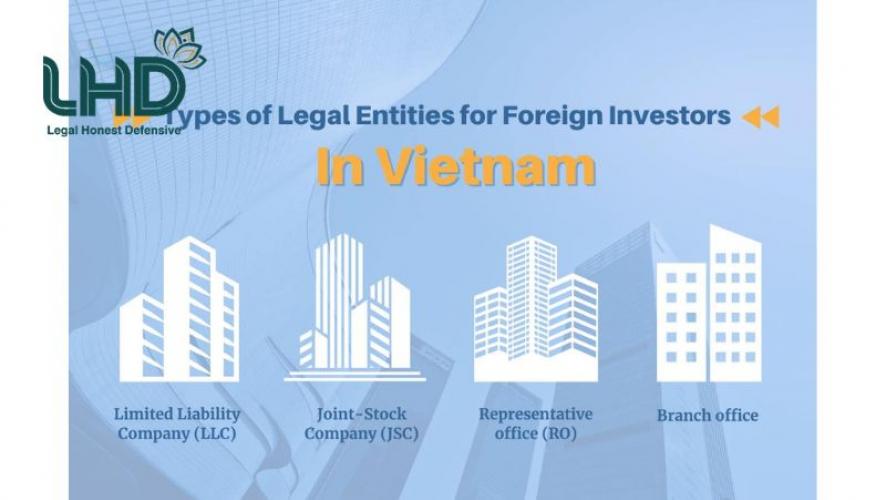
Foreign investors commonly choose among the following options:
1. Limited Liability Company (LLC)
2. Joint Stock Company (JSC)
3. Representative Office (RO)
4. Branch Office (BO)
Each entity serves different business purposes and investment objectives.
1. Limited Liability Company (LLC)
The Limited Liability Company is the most popular business structure for foreign investors in Vietnam.
Types of LLCs
Vietnam recognizes two forms:
Single-Member LLC
Owned by:
-
One individual
-
One corporate shareholder
Multi-Member LLC
Owned by:
-
Two to fifty members
Foreign investors may own up to 100% of an LLC where permitted by law.
Advantages of an LLC
Limited Liability Protection
Owners are liable only to the extent of their capital contributions.
Simple Management Structure
LLCs require fewer corporate formalities than Joint Stock Companies.
Flexible Ownership
Suitable for:
-
SMEs
-
Startups
-
Consulting firms
-
Trading companies
-
Manufacturing businesses
Easier Compliance
Administrative requirements are generally less burdensome compared to larger corporate structures.
Disadvantages of an LLC
Limited Fundraising Opportunities
LLCs cannot issue shares to the public.
Transfer Restrictions
Capital transfers may involve additional procedures and member approvals.
Best For
-
Small and medium-sized businesses
-
Foreign-owned subsidiaries
-
Service companies
-
Trading businesses
-
Manufacturing operations
2. Joint Stock Company (JSC)
A Joint Stock Company is a corporate structure designed for larger businesses seeking investment and expansion opportunities.
Ownership Requirements
A JSC must have:
-
Minimum 3 shareholders
-
No maximum shareholder limit
Shareholders may be:
-
Individuals
-
Corporate entities
-
Foreign investors
Key Characteristics
Ownership is divided into shares.
Shareholders are responsible only for the amount invested.
Advantages of a JSC
Capital Raising Capability
JSCs can:
-
Issue shares
-
Attract investors
-
Raise substantial capital
Easier Ownership Transfers
Shares can generally be transferred more easily than LLC ownership interests.
Suitable for Expansion
JSCs provide greater flexibility for future growth and investment rounds.
Potential Public Listing
Only JSCs may eventually become publicly listed companies.
Disadvantages of a JSC
More Complex Governance
JSCs require:
-
Shareholder meetings
-
Board governance
-
Additional reporting obligations
Higher Administrative Burden
Compliance requirements are more extensive than those for LLCs.
Best For
-
Large enterprises
-
Venture-backed startups
-
Businesses planning fundraising
-
Companies considering IPO opportunities
3. Representative Office (RO)
A Representative Office is not a separate legal entity.
Instead, it serves as an extension of a foreign company in Vietnam.
Permitted Activities
Representative Offices may:
-
Conduct market research
-
Promote business opportunities
-
Liaise with partners
-
Supervise contracts
Restricted Activities
Representative Offices cannot:
-
Generate revenue
-
Issue invoices
-
Conduct direct commercial activities
-
Earn profits in Vietnam
Advantages of a Representative Office
Simple Setup
The licensing process is generally less complicated.
Lower Operating Costs
Administrative obligations are relatively limited.
Market Entry Tool
Ideal for businesses exploring opportunities before making larger investments.
Disadvantages of a Representative Office
No Revenue Generation
Commercial activities remain prohibited.
Limited Business Functions
Operational capabilities are restricted.
Best For
-
Market research
-
Business development
-
Brand promotion
-
Initial market exploration
4. Branch Office
A Branch Office allows certain foreign companies to conduct commercial activities in Vietnam.
Unlike a Representative Office, a branch may engage in revenue-generating activities where permitted.
Characteristics
A branch:
-
Operates under the parent company
-
Is not a separate legal entity
-
May conduct approved business operations
Advantages of a Branch
Commercial Activities Allowed
Branches may perform business functions authorized by law.
Direct Parent Company Control
The parent company retains operational control.
Disadvantages of a Branch
Limited Availability
Not all industries permit branch operations.
Regulatory Complexity
Additional licensing requirements may apply.
Best For
-
Foreign service providers
-
Certain regulated industries
-
Businesses with established international operations
Comparison of Business Structures
| Feature | LLC | JSC | Representative Office | Branch |
|---|---|---|---|---|
| Separate Legal Entity | Yes | Yes | No | No |
| Revenue Generation | Yes | Yes | No | Yes |
| Limited Liability | Yes | Yes | Parent Company | Parent Company |
| Foreign Ownership | Often 100% | Often 100% | N/A | Industry Dependent |
| Share Issuance | No | Yes | No | No |
| IPO Potential | No | Yes | No | No |
| Market Research Activities | Yes | Yes | Yes | Yes |
| Commercial Operations | Yes | Yes | No | Yes |
Which Business Entity Is Best for Foreign Investors?
Choose an LLC If
You want:
-
Full operational control
-
Simple management
-
Limited liability protection
-
100% foreign ownership
-
Moderate startup costs
Most foreign investors entering Vietnam select an LLC structure.
Choose a JSC If
You plan to:
-
Raise capital from investors
-
Add multiple shareholders
-
Expand rapidly
-
Pursue public listing opportunities
Choose a Representative Office If
You need to:
-
Explore the market
-
Build relationships
-
Conduct research
Without immediately engaging in business operations.
Choose a Branch Office If
Your industry permits branch operations and you want to conduct business directly under your foreign parent company.
Factors to Consider Before Choosing a Structure
Investment Objectives
Consider:
-
Long-term goals
-
Growth plans
-
Exit strategies
Industry Restrictions
Certain sectors impose:
-
Ownership caps
-
Licensing requirements
-
Operational restrictions
Capital Requirements
Some structures may be more suitable depending on planned investment size.
Future Fundraising Needs
Businesses expecting investment rounds should evaluate whether a JSC structure offers greater flexibility.
Compliance Burden
Different structures involve different levels of administrative responsibility.
Common Mistakes Foreign Investors Make
Choosing a Representative Office Instead of an LLC
Many investors discover later that they need revenue-generating capabilities.
Underestimating Growth Requirements
An LLC may become restrictive if significant fundraising is anticipated.
Ignoring Industry-Specific Rules
Ownership limitations can affect entity selection.
Failing to Plan for Future Expansion
Corporate structure decisions should support long-term business objectives.
Frequently Asked Questions
Can a Foreigner Own 100% of an LLC in Vietnam?
Yes, in many industries foreign investors may own 100% of an LLC.
Is an LLC Better Than a JSC?
For most SMEs and foreign-owned subsidiaries, an LLC is typically the preferred structure.
Can a Representative Office Sign Contracts?
A Representative Office may facilitate activities but generally cannot conduct independent revenue-generating operations.
Can a Branch Generate Revenue?
Yes, if the industry permits branch operations and relevant licenses are obtained.
Conclusion
Vietnam offers several business structures for foreign investors, each designed to support different commercial objectives.
For most foreign entrepreneurs and international companies entering Vietnam, the Limited Liability Company (LLC) remains the most practical and flexible choice due to its straightforward management structure, liability protection, and suitability for 100% foreign ownership.
However, investors planning large-scale expansion, fundraising, or public listing opportunities may find a Joint Stock Company more appropriate. Meanwhile, Representative Offices and Branch Offices serve specific strategic purposes depending on operational needs.
Before establishing a company, investors should carefully evaluate ownership requirements, industry restrictions, licensing obligations, and long-term business goals to ensure they select the most effective legal structure.
For a complete registration roadmap, see our guide: Set Up Company in Vietnam.
Send comment
Others Post






+68889+
+16889+
+39+
3+
0 comment