
IRC vs ERC Vietnam: Two certificates, two very different jobs
- 03/08/2026

 CONTENT
CONTENT
Ask five foreign investors what separates these two documents, and four will guess wrong. That is not a criticism. The names sound almost interchangeable, and government guidance rarely spells out why both exist. Yet the IRC vs ERC Vietnam distinction sits at the center of nearly every company formation timeline, and getting the sequence wrong is one of the most common reasons a filing stalls.
This article lays out what each certificate actually covers, when you need one versus the other, and where investors typically trip up. LHD Law Firm has processed both documents for foreign clients since 2007, and the confusion between them remains remarkably consistent year after year.

What the IRC actually does
The Investment Registration Certificate, or IRC, is the government's approval of your investment project itself. It confirms the project exists on paper: what you plan to invest, in which sector, with how much capital, and for how long. Only foreign-invested projects need one. A wholly Vietnamese-owned company skips this step entirely.
Processing usually takes 15 to 25 working days, depending on the province and the sector involved. Conditional sectors add review time. Sometimes a lot of it.
What the ERC actually does
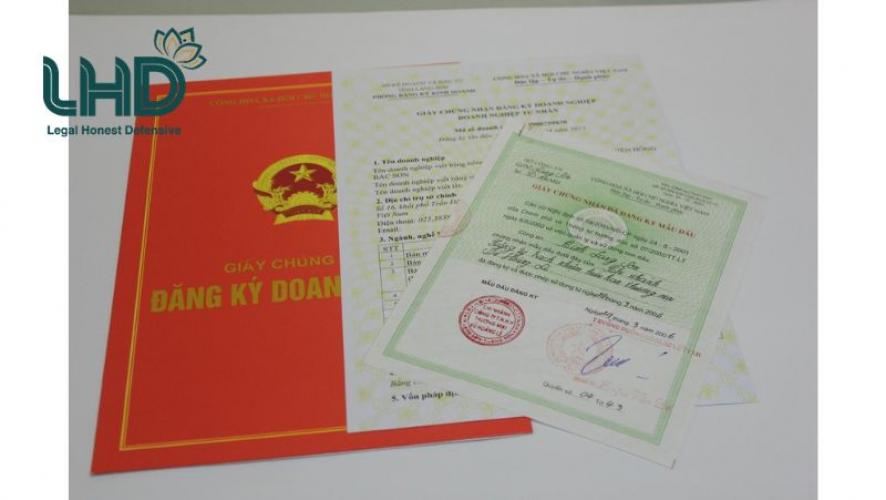
The Enterprise Registration Certificate, or ERC, is different. It creates the legal entity. Without it, there is no company, no tax code, no bank account. Every business operating in Vietnam needs an ERC, foreign-invested or not.
Here is the part that trips people up: for a foreign-invested project, the ERC cannot be issued before the IRC. The sequence is fixed. IRC first, ERC second. Try to skip ahead, and the application simply gets rejected.
A manufacturing case that shows why order matters
A European manufacturer once asked us to expedite ERC issuance while their IRC application for a conditional sector was still under review. They assumed the two processes could run in parallel to save time. They cannot. The ERC application requires the IRC number as a reference field. Without it, the file has nowhere to go.
The client lost roughly three weeks correcting their own project plan, not because the government was slow, but because the internal sequence was misunderstood from the start. A quick call before filing would have avoided it entirely.
When you only need one, not both

Not every business needs both documents. A domestic company with no foreign shareholders never applies for an IRC. Only the ERC applies, and the process is noticeably faster, often two to three weeks start to finish.
We saw this play out with a local retail brand that later brought in a foreign minority shareholder. Suddenly, an IRC became necessary retroactively, layered on top of an entity that already existed. It is doable, but it involves an amendment procedure rather than a fresh filing, and it is rarely as quick as clients hope.
Side-by-side comparison
|
IRC |
ERC |
|
|
Confirms |
The investment project |
The legal entity |
|
Required for |
Foreign-invested projects only |
Every company, foreign or domestic |
|
Issued by |
Provincial Department of Planning and Investment or management board |
Business registration office |
|
Typical timeline |
15 to 25 working days |
3 to 5 working days after IRC |
|
Comes first? |
Yes, for foreign-invested projects |
No, always second |
Common mistakes worth avoiding
- Assuming ERC and IRC can be filed at the same time to save days
- Declaring investment capital in the IRC application that does not match what gets contributed later
- Forgetting that an IRC amendment is needed whenever the project scope, capital, or shareholder structure changes materially
- Treating the ERC as the finish line, when in practice sub-licenses and tax registration still follow
In our experience, the second mistake causes more downstream friction than the first. A capital figure declared casually at the IRC stage becomes a legal obligation the moment the certificate is issued.
Why this distinction matters beyond paperwork

It is tempting to treat IRC and ERC as bureaucratic formalities, two more stamps on the road to opening a business. That view undersells what is actually happening. The IRC is where the government evaluates whether your project fits sector rules, capital expectations, and land or location requirements. The ERC is where your company becomes a distinct legal person under Vietnamese law, capable of signing contracts and hiring staff.
Miss a detail at the IRC stage, and it follows the project for its entire life, since amending it later is slower than getting it right the first time.
If you are still mapping out the registration sequence from scratch, our full walkthrough on how to set up company in Vietnam covers every stage in order, IRC and ERC included. For a deeper look specifically at the investment approval stage, see our guide to the Investment Registration Certificate (IRC) in Vietnam, which expands on documentation requirements this article only summarizes.
Frequently asked questions
Can IRC and ERC applications be submitted on the same day?
No, not for foreign-invested projects. The ERC application needs the IRC number, so the IRC must be issued first.
Does a 100 percent foreign-owned company need both certificates?
Yes. Every foreign-invested company needs an IRC first, then an ERC to become a registered legal entity.
What happens if I change my business plan after the IRC is issued?
Material changes, such as capital, scope, or shareholder structure, typically require an IRC amendment before the company can proceed with related updates.
Get help sequencing your filing correctly
The IRC vs ERC Vietnam question sounds procedural until it delays a launch date by weeks. LHD Law Firm has guided foreign investors through both certificates, in the correct order, since 2007, from Ho Chi Minh City to Ha Noi and Da Nang.
For a review of your specific project timeline, reach out:
LHD Law Firm Ho Chi Minh City HP Tower, 60 (Floor 7), Nguyen Van Thu Street, Tan Dinh Ward, Ho Chi Minh City, Vietnam Tel: +84 28 2244 6739 | Email: all@lhdfirm.com
LHD Law Firm Ha Noi Anh Minh Tower, 36 (Floor 4), Hoang Cau Street, O Cho Dua Ward, Ha Noi City, Vietnam Tel: +84 24 6260 4011 | Email: hanoi@lhdfirm.com
LHD Law Firm Da Nang No. 71, Ly Tu Trong Street, Thach Thang Ward, Da Nang City, Vietnam Tel: +84 905 987 929 | Email: danang@lhdfirm.com
Send comment
Others Post








+68889+
+16889+
+39+
3+
0 comment