
Business license Vietnam: The step most founders miss after registration
- 09/08/2026
 CONTENT
CONTENT
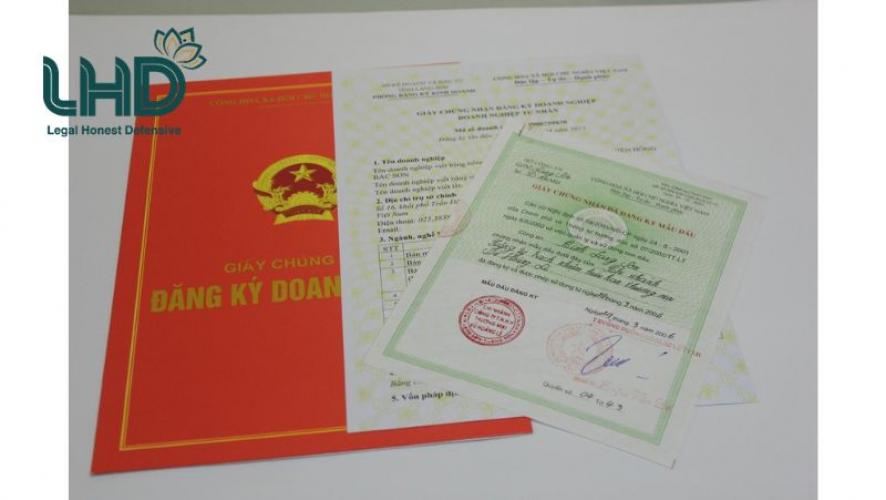
Here's a mistake that catches even experienced investors off guard. They finish company registration, receive the Enterprise Registration Certificate, print it out, frame it, and assume they're cleared to operate. Then a customs officer, a district inspector, or a bank compliance officer asks for a license the company never applied for. A business license Vietnam authorities recognize isn't automatically bundled into the ERC. For dozens of business lines, it's a separate step, sometimes a slow one, and skipping it carries real consequences.

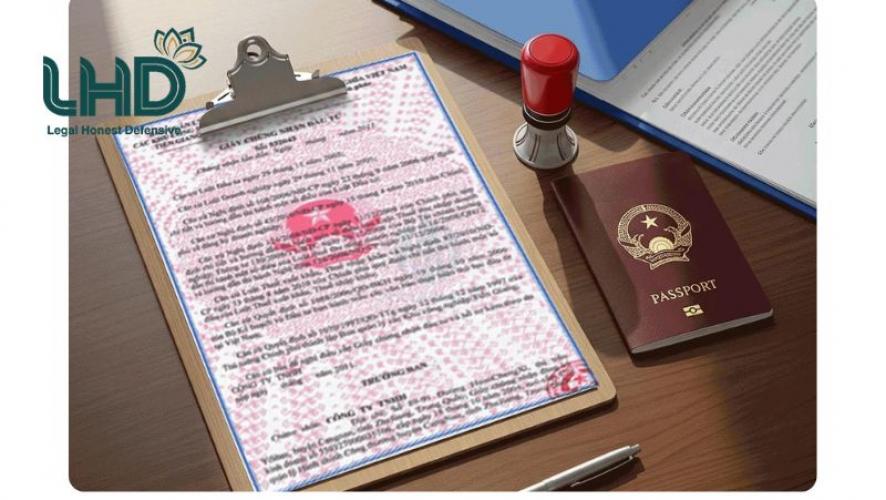
The ERC is a registration, not a permission slip
The Enterprise Registration Certificate confirms your company legally exists. It lists your registered business lines, your charter capital, your legal representative. What it doesn't do, for a specific category of "conditional business lines," is grant you the operational green light.
Vietnam's Investment Law and various specialized decrees maintain a list of conditional sectors. Food service, education and training centers, travel and tourism, pharmaceuticals, cosmetics manufacturing, private security, alcohol distribution, and finance-adjacent services all sit on that list. If your registered business line falls into one of these categories, you need a sub-license, sometimes called a business license, sometimes a practicing certificate, sometimes an eligibility certificate, depending on the sector.
Common types of business licenses in Vietnam
Sub-licenses tied to a specific industry
A restaurant needs a food safety eligibility certificate before it can legally serve customers, issued by the local health department after an on-site inspection. A language center needs an operating license from the education department, which checks classroom facilities, teacher qualifications, and curriculum. A travel agency arranging international tours needs an international travel business license from the tourism authority, plus a deposit held at a designated bank.
Retail and trading licenses for foreign-invested companies
This one surprises a lot of foreign investors. Even after registering "wholesale and retail trade" as a business line, foreign-invested companies generally need a separate trading license, and sometimes a retail outlet license for each physical store, before they can actually sell goods to end consumers in Vietnam.
Import-export and specialized product licenses
Certain goods, cosmetics, medical devices, food supplements, require product-level registration or announcement before import, on top of the company-level license. This is where the line between "business license" and "product license" gets blurry, and where a lot of delays happen.
A real case: why timing matters
A European skincare brand once registered its Vietnam subsidiary, expecting to launch within two months. The ERC came through in about a week. Everything looked fine, until the team discovered that every SKU needed a cosmetic product notification filed with the Ministry of Health before it could legally reach shelves. That process, done properly, took nearly ten weeks per batch of products. Their launch slipped by an entire quarter. Not because company formation was slow. Because the sub-license timeline was never mapped against the marketing calendar.
Contrast that with a logistics company entering a non-conditional business line. Freight forwarding for general cargo, in most cases, doesn't require a specialized operating license beyond the ERC itself. Their launch timeline was, essentially, however fast their office setup and hiring went. Same jurisdiction, wildly different bureaucratic path, purely because of industry classification.
Operating without the required license: what's actually at risk

Administrative fines are the most visible consequence, and they vary by sector, sometimes running into tens of millions of Vietnamese dong per violation. But fines rarely tell the full story. Contracts signed without a valid operating license can be challenged. Bank compliance teams increasingly ask for sub-licenses before releasing certain payments. Landlords in commercial buildings sometimes require proof of a valid operating license before renewing a lease for a conditional business.
There's also a reputational cost that's harder to quantify. A partner or investor who discovers a company has been operating without a required license loses confidence fast, and rightly so.
How to figure out if your business line needs one
There isn't a single master list that covers every case cleanly, which is part of the problem. The practical approach:
- Check whether your registered business line code (VSIC code) appears on the current list of conditional business lines under the Investment Law and its guiding decrees.
- Confirm which specific sub-license applies, since some industries have more than one layer, for example a pharmacy distributor may need both a Good Distribution Practice certificate and a pharmaceutical business license.
- Map the licensing timeline against your planned launch date, not the other way around.
- Verify whether the license is issued at the district, provincial, or ministry level, since that alone can change the timeline from weeks to months.
Building the license roadmap early
Founders who treat licensing as a parallel workstream, running alongside company formation rather than after it, tend to launch on schedule. That means identifying conditional business lines before finalizing the Vietnam company formation paperwork, so charter capital, business line codes, and licensing prerequisites all line up from day one.
It also helps to understand how the Enterprise Registration Certificate process fits into the broader picture. The ERC is issued first, quickly in most cases, but for conditional sectors it's really only the opening step of a longer approval chain.
Business licensing in Vietnam rewards preparation and punishes assumption. A company that assumes its ERC covers everything usually finds out the hard way, mid-launch, when a regulator or a bank asks a question nobody had an answer for.
If your business line touches a regulated sector, it's worth having someone map the full license chain before you commit to a launch date. LHD Law Firm has advised foreign investors on conditional business licensing across food, education, trading, and healthcare sectors since 2007, and can flag which sub-licenses apply to your specific registered business lines before they become a bottleneck.
LHD Law Firm contact details:
Ho Chi Minh City: HP Tower, 60 (Floor 7) Nguyen Van Thu Street, Tan Dinh Ward, HCM City, Vietnam. Tel: +842822446739. Email: all@lhdfirm.com
Ha Noi: Anh Minh Tower, 36 (Floor 4) Hoang Cau Street, O Cho Dua Ward, Ha Noi City, Vietnam. Tel: +842462604011. Email: hanoi@lhdfirm.com
Da Nang: No. 71 Ly Tu Trong Street, Thach Thang Ward, Da Nang City, Vietnam. Tel: +840905987929. Email: danang@lhdfirm.com
Send comment
Others Post




+68889+
+16889+
+39+
3+
0 comment