
Choosing the right business entity Vietnam: How founders should actually decide
- 09/08/2026
 CONTENT
CONTENT
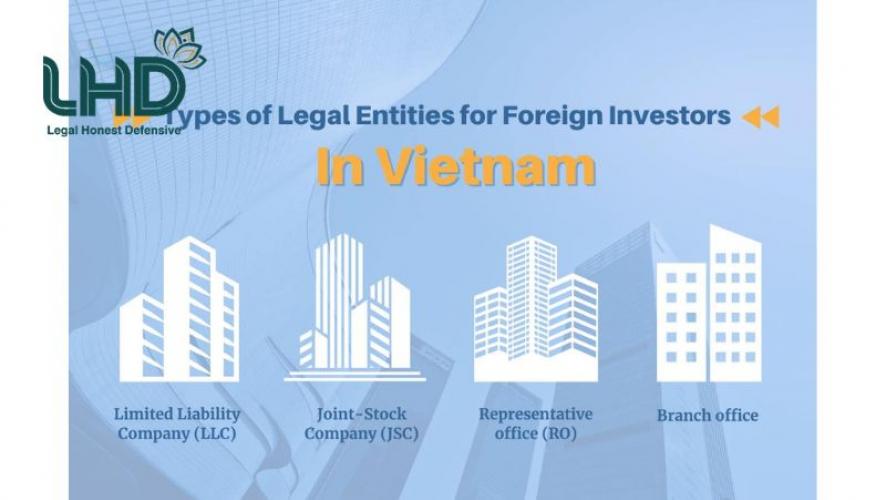
Most guides on business entity Vietnam stop at definitions: here's an LLC, here's a JSC, here's a representative office. Useful, but it skips the part founders actually struggle with, which is the decision itself. Two investors with near-identical businesses can end up with completely different structures, and both can be right, because the correct entity depends less on the business idea and more on how you plan to run it, fund it, and eventually exit it.
So instead of another list of legal definitions, this is a guide to the actual decision.

Start with who's investing, not what the business does
The number and type of investors usually narrows the options before anything else does. A solo founder or a single foreign parent company almost always defaults to a single-member limited liability company. It's simple, it's fully controlled by one owner, and reporting obligations stay light.
Bring in a second investor, and a multi-member LLC becomes the natural choice, provided the founders don't plan to raise from outside shareholders later. The moment fundraising from a broader group of investors, or a future IPO, enters the conversation, a joint stock company starts to make more sense, since only a JSC can freely issue shares to new shareholders without the same restructuring friction an LLC requires.
Compare structures against what actually matters to you
Rather than comparing every legal feature, three questions tend to settle 80 percent of cases.
How much liability protection do you need
LLCs and JSCs both limit liability to the capital contributed. A sole proprietorship, by contrast, exposes the owner's personal assets, which is why almost no foreign investor chooses it. Partnerships sit somewhere in between, with general partners carrying unlimited liability, so they're rarely used outside professional services like law and accounting firms.
How complex should governance be
An LLC with one or two members can run with minimal formality; there's no requirement for a full board structure. A JSC, on the other hand, generally needs a General Meeting of Shareholders, a Board of Directors, and often a Supervisory Board depending on size, which adds cost and process. If you're a small trading company with three staff, that governance overhead isn't worth it yet.
Do you need a full legal presence, or just a foothold
Not every foreign company needs a locally incorporated entity on day one. A representative office lets a foreign parent company maintain a presence, conduct market research, and liaise with partners in Vietnam, without engaging in direct revenue-generating activity. It's cheaper to set up and cheaper to close down. A branch office goes a step further, allowing commercial activity tied to the parent's licensed business lines, though branches remain uncommon for foreign investors outside specific regulated sectors like banking.
Real scenarios that illustrate the trade-offs
Consider a US e-commerce company testing the Vietnamese market before committing capital. They don't need to sell locally yet; they need staff on the ground building supplier relationships. A representative office fits perfectly here, and switching to an LLC once the market validates itself is a straightforward next step, not a wasted investment.
Now take a manufacturing group from South Korea planning a factory with three local co-investors and plans to bring in a private equity partner within three years. A multi-member LLC would work initially, but the planned future fundraising round makes a JSC the smarter starting structure, since converting from LLC to JSC later means extra paperwork, timing risk, and occasionally renegotiated shareholder terms mid-process.
A third case worth flagging: a solo European consultant assumed a representative office would let her invoice local clients directly. It doesn't work that way. Representative offices in Vietnam cannot generate revenue, full stop. She ended up incorporating a single-member LLC six months later than planned, after losing time and a client relationship to the misunderstanding.
Industry restrictions narrow the list further

Some sectors cap foreign ownership percentages or restrict which entity types are even permitted, regardless of what the founders prefer. Education, logistics, advertising, and several retail categories all carry conditions under Vietnam's WTO commitments and sector-specific decrees. Before settling on a structure, it's worth checking whether your specific business line sits on a restricted or conditional list, since that can override an otherwise sound choice of entity type.
A quick decision checklist
- One or two owners with no near-term fundraising plans: single-member or multi-member LLC.
- Multiple investors, plans to raise capital or eventually list: joint stock company.
- Testing the market before committing to revenue activity: representative office.
- Extending an existing licensed business line directly into Vietnam: branch office, in limited sectors.
- Professional services with shared personal liability accepted: partnership, though this remains a niche choice among foreign investors.
None of these categories are permanent traps. Businesses convert from LLC to JSC, close representative offices in favor of full entities, and restructure ownership as they grow. The entity chosen at incorporation is a starting point, not a life sentence, but getting it right early still saves a meaningful amount of legal cost and delay down the line.
Getting the structure right before you file
Choosing badly doesn't usually blow up the business. It just adds friction: an LLC that can't take the investment round it needs, a representative office quietly breaching its revenue restriction, a JSC carrying governance costs a three-person team didn't need yet. These are avoidable with the right advice before, not after, the Vietnam company formation paperwork gets filed.
If you're weighing entity types alongside the broader setup process, it's worth reading through the 10-step legal roadmap for establishing a foreign-invested enterprise, which walks through how the entity decision fits into the wider licensing sequence.
LHD Law Firm has advised foreign investors on structuring decisions like these since 2007, and can map out which entity actually fits your capital plan and industry before you commit to one on paper.
Send comment
Others Post








+68889+
+16889+
+39+
3+
0 comment