
Establishing a Foreign-Invested Enterprise (FIE) in Vietnam: 10-Step Legal Roadmap
- 24/07/2026


 CONTENT
CONTENT
Legal Memorandum: A Strategic Roadmap for Establishing a Foreign-Invested Enterprise (FIE) in Vietnam – A Practical 10-Step Compliance Framework
Executive Summary
Establishing a foreign-invested enterprise (FIE) in Vietnam involves considerably more than obtaining an Enterprise Registration Certificate (ERC). One of the most common misconceptions among foreign investors is that incorporation automatically authorizes commercial operations. In reality, a company may legally exist but remain prohibited from conducting business until it satisfies all investment, licensing, tax, banking, and regulatory requirements.
A legally incorporated company is not necessarily an operationally compliant company.
Successful market entry therefore requires a carefully coordinated legal strategy that integrates investment regulations, enterprise law, tax compliance, foreign exchange control, labor regulations, and sector-specific licensing requirements.
This memorandum provides foreign investors, corporate counsel, executives, and investment decision-makers with a comprehensive legal roadmap for establishing an FIE in Vietnam while minimizing regulatory risk and ensuring the business is fully prepared for its first lawful commercial transaction.
I. Strategic Planning Before Incorporation
Every successful investment begins long before filing the first application.
Rather than asking "How do we establish a company?", investors should first determine "What legal structure best supports our commercial objectives in Vietnam?"
A properly designed market-entry strategy significantly reduces future restructuring costs, licensing delays, tax exposure, and regulatory complications.
1. Conduct a Comprehensive Market Access Assessment
The first legal question is not the business sector.
It is the commercial activity the investor intends to perform.
Vietnam regulates foreign investment based primarily on:
- the actual services or products supplied;
- the contractual relationship with customers;
- the method of revenue generation;
- the applicable international commitments; and
- domestic investment restrictions.
Legal advisors should therefore analyze:
- What products or services will be offered?
- Will contracts be signed inside or outside Vietnam?
- Who invoices customers?
- How will payments be collected?
- Will employees perform regulated activities?
- Does the business involve import, distribution, manufacturing, software development, consulting, education, logistics, healthcare, finance, or e-commerce?
The answers determine whether the proposed business is:
- fully open to foreign investment;
- subject to foreign ownership limitations;
- conditional upon obtaining additional approvals; or
- prohibited altogether.
The assessment should include a detailed review of:
- Vietnam's WTO Commitments;
- CPTPP commitments;
- EVFTA obligations;
- other applicable international treaties;
- the Law on Investment;
- sector-specific legislation; and
- implementing decrees and circulars.
Only after completing this legal assessment should the investor determine the appropriate investment structure.
2. Select the Appropriate Corporate Vehicle
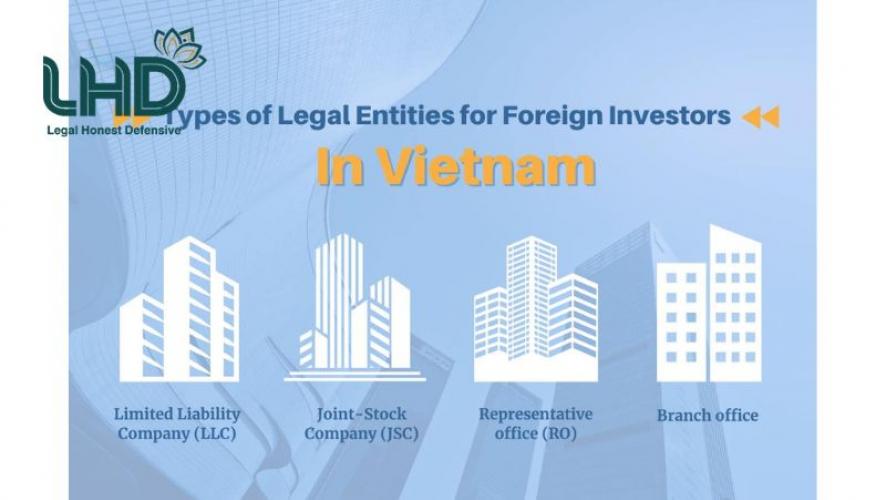
Vietnam generally offers two principal corporate structures for foreign investors.
Limited Liability Company (LLC)
An LLC is generally preferred where the investor seeks:
- centralized management;
- confidentiality;
- simplified governance;
- fewer compliance obligations;
- wholly foreign-owned subsidiaries;
- joint ventures with limited partners.
Key advantages include:
- no mandatory Board of Directors;
- flexible internal governance;
- restrictions on transfer of ownership interests;
- greater control over admission of new investors.
For most foreign investors entering Vietnam, the LLC remains the preferred structure.
Joint Stock Company (JSC)
A JSC is generally appropriate where investors anticipate:
- multiple shareholders;
- private equity investment;
- venture capital funding;
- future IPO planning;
- employee share ownership programs;
- easier capital mobilization.
Compared with an LLC, a JSC offers greater flexibility in capital raising but involves more complex governance and disclosure obligations.
The corporate structure should therefore be selected based on the long-term investment strategy rather than merely the incorporation process.
3. Prepare Investor Documentation
Vietnamese licensing authorities require extensive documentary evidence regarding the foreign investor's legal status and financial capacity.
Typical documents include:
Corporate Investors
- Certificate of Incorporation
- Business Registration Certificate
- Articles of Association
- Certificate of Good Standing (where applicable)
- Audited Financial Statements
- Board Resolution approving the investment
- Power of Attorney
Individual Investors
- Passport
- Proof of financial capability
- Bank confirmation
- Personal investment declaration
Foreign-issued documents generally require:
- notarization (where applicable);
- consular legalization (unless exempt under treaty);
- certified Vietnamese translation; and
- notarized translation certification.
Preparing these documents early can significantly reduce licensing delays.
Readmore: Set up company in Vietnam
II. Critical Legal Compliance During Company Establishment
1. Understanding the Relationship Between the ERC and the IRC
Recent legislative reforms have introduced greater procedural flexibility in establishing foreign-invested enterprises.
Under the current legal framework, foreign investors may, in certain circumstances, establish an economic organization before completing investment registration procedures.
However, this procedural flexibility does not eliminate investment regulation.
Where an Investment Registration Certificate (IRC) remains legally required, the investment project cannot lawfully commence implementation until the IRC has been granted.
This distinction is fundamental.
The ERC establishes the legal existence of the company.
The IRC authorizes the implementation of the investment project.
Confusing these two certificates remains one of the most common compliance errors made by foreign investors.
2. Verify the Legal Status of the Business Premises
Selecting an office is not merely a commercial decision—it is also a legal compliance issue.
Licensing authorities routinely reject applications where:
- residential apartments are used as corporate headquarters;
- land use purposes do not permit commercial activities;
- the landlord lacks authority to lease the premises;
- fire safety requirements cannot be satisfied;
- environmental approvals are unavailable.
Before executing a long-term lease, investors should conduct legal due diligence covering:
- ownership rights;
- land use rights;
- construction permits;
- zoning compliance;
- fire prevention regulations;
- environmental approvals;
- leasing authority.
As a risk management measure, investors should initially execute a conditional Memorandum of Understanding (MOU) containing refund provisions if regulatory approval is not obtained.
3. Charter Capital and Foreign Capital Contribution
Vietnam places significant emphasis on the adequacy and legality of charter capital.
The proposed charter capital should realistically support:
- office establishment;
- operating expenses;
- payroll;
- equipment purchases;
- working capital;
- business development.
Authorities increasingly scrutinize projects with unrealistically low capitalization.
Equally important is compliance with Vietnam's foreign exchange regulations.
Foreign capital contributions must generally be:
- transferred through a Direct Investment Capital Account (DICA);
- remitted in the registered foreign currency (where applicable);
- completed within the statutory contribution period;
- supported by proper banking documentation.
Failure to comply with these requirements may result in:
- administrative penalties;
- difficulties repatriating profits;
- restrictions on foreign exchange transactions;
- complications during future capital increases.
Capital should never be contributed through an ordinary operating bank account where the law requires use of a DICA.
4. Sector-Specific Business Licenses
Many investors mistakenly assume that registration of a business line on the ERC authorizes immediate commercial operation.
It does not.
Numerous industries require additional regulatory approvals before operations may commence.
Common examples include:
- retail distribution;
- e-commerce;
- education;
- logistics;
- healthcare;
- food services;
- travel services;
- financial technology;
- telecommunications;
- advertising;
- pharmaceutical activities.
Each sector has its own licensing regime, qualification requirements, and ongoing compliance obligations.
Companies should therefore prepare a licensing matrix identifying:
- required permits;
- issuing authorities;
- approval timelines;
- operational prerequisites.
This prevents commercial teams from signing contracts before the company is legally authorized to perform the relevant services.
III. A Practical 10-Step Framework for Establishing an FIE in Vietnam
A legally compliant market entry typically follows the following sequence:
Step 1 — Develop the Commercial and Investment Strategy
Define the proposed business model, revenue streams, operational scope, and market access conditions.
Step 2 — Design the Corporate Structure
Determine ownership ratios, governance arrangements, investment vehicle, and appointment of the legal representative.
Step 3 — Conduct Legal Due Diligence on the Business Premises
Verify the legal status of the proposed office or project location before entering binding lease commitments.
Step 4 — Prepare and Legalize Investor Documentation
Complete notarization, consular legalization, certified translations, and corporate authorizations.
Step 5 — Incorporate the Enterprise
Apply for the Enterprise Registration Certificate (ERC).
Step 6 — Obtain the Investment Registration Certificate (Where Required)
Complete all investment approval procedures applicable to the proposed project.
Step 7 — Open Banking Facilities and Inject Charter Capital
Establish the Direct Investment Capital Account (DICA), remit investment capital, and comply with statutory capital contribution deadlines.
Step 8 — Complete Post-Licensing Compliance
This includes:
- tax registration;
- electronic invoicing;
- digital signature registration;
- labor declarations;
- social insurance registration;
- beneficial ownership reporting;
- accounting system implementation.
Step 9 — Obtain Operational Licenses
Secure all sector-specific permits required before commencing regulated business activities.
Step 10 — Perform a Legal Readiness Review
Before issuing the first invoice or signing commercial contracts, conduct a comprehensive legal audit confirming that:
- investment approvals are complete;
- tax registrations are active;
- banking arrangements comply with foreign exchange rules;
- operational licenses are valid;
- employment compliance has been completed;
- internal corporate governance documentation is in place.
Only after completing this review should commercial operations begin.
IV. Principal Legal Risks for Foreign Investors
Based on extensive practical experience advising international clients, four categories of legal risk consistently arise during market entry.
1. Regulatory Inconsistency
Discrepancies between the:
- Investment Registration Certificate;
- Enterprise Registration Certificate;
- company charter;
- banking records;
- commercial agreements; and
- tax registrations
can create significant legal complications during regulatory inspections and future corporate transactions.
2. Premature Commercial Operations
Some companies begin providing services immediately after incorporation without obtaining mandatory investment approvals or sector-specific licenses.
Such activities may expose the company to:
- administrative sanctions;
- suspension of operations;
- contractual disputes;
- tax complications;
- reputational damage.
3. Facility Compliance Risks
Failure to satisfy statutory requirements relating to:
- fire prevention;
- environmental protection;
- construction standards;
- warehouse conditions;
- educational facilities;
- healthcare infrastructure
may delay operations long after incorporation.
4. Foreign Exchange and Capital Contribution Risks
Improper capital remittance remains one of the most frequent compliance failures.
Typical errors include:
- contributing capital to the wrong account;
- missing statutory deadlines;
- incorrect payment references;
- undocumented shareholder loans.
These mistakes may affect future:
- dividend remittance;
- profit repatriation;
- capital reduction;
- investment restructuring;
- regulatory inspections.
V. How LHD Law Firm Supports Foreign Investors
Establishing a business in Vietnam requires more than document preparation—it demands strategic legal planning, regulatory coordination, and proactive risk management.
LHD Law Firm provides comprehensive legal support throughout the entire investment lifecycle, from initial market entry to ongoing corporate governance.
Our services include:
Market Entry Strategy
- Foreign investment advisory
- Market access analysis
- Investment structuring
- Regulatory due diligence
Company Formation
- Preparation of incorporation documents
- Investment Registration Certificate (IRC)
- Enterprise Registration Certificate (ERC)
- Liaison with licensing authorities
Licensing and Regulatory Compliance
- Sector-specific operating licenses
- Trading licenses
- E-commerce registrations
- Work permits
- Visas and temporary residence cards
Banking, Tax, and Corporate Compliance
- Direct Investment Capital Account (DICA) guidance
- Initial tax registration
- Accounting compliance
- Electronic invoicing
- Payroll and labor compliance
Corporate Governance
- Joint venture agreements
- Shareholders' agreements
- Internal governance documentation
- Commercial contracts
- Compliance policies
- Corporate restructuring
Conclusion
Entering the Vietnamese market successfully requires more than completing administrative formalities. It requires a coordinated legal strategy that aligns investment approvals, corporate governance, foreign exchange compliance, taxation, labor obligations, and sector-specific licensing.
At LHD Law Firm, we help foreign investors move beyond incorporation to achieve full legal operational readiness—ensuring that your business is not only established, but also structured for sustainable growth, regulatory compliance, and long-term commercial success in Vietnam.
Send comment
Others Post






+68889+
+16889+
+39+
3+
0 comment