
VAT Vietnam rules every foreign-invested company should know
- 03/08/2026

 CONTENT
CONTENT
A new foreign-invested company gets its tax code within days of incorporation. VAT obligations start almost as fast. There's no grace period, no quiet ramp-up phase - the moment a company issues its first invoice, VAT Vietnam rules are already in play.
That catches people off guard more often than you'd think. Founders plan around corporate income tax, since it only bites once profit shows up. VAT doesn't wait for profit. It applies transaction by transaction, from day one.

The rate structure right now
Vietnam runs four VAT rates: 0%, 5%, 8% and 10%. The standard rate is 10%, but a temporary cut to 8% has applied to most goods and services since July 2025, extended through the end of 2026 under successive government resolutions.
Not everything qualifies for the discount, though. Finance, insurance, telecommunications and real estate stay at 10% regardless of the temporary reduction. A foreign-invested fintech company, for instance, doesn't get to apply 8% just because most of its peers in adjacent industries do - the sector carve-out is specific, and it's worth checking before you build pricing models around the lower rate.
Exports sit at 0%, provided the goods physically leave Vietnam and the paperwork proves it. Basic agricultural and unprocessed goods often fall under 5%. Everything else defaults to the standard rate unless a specific exemption applies.
What changed under the new law
Law 48/2024/QH15 came into effect on 1 July 2025, followed by further amendments under Law 149/2025/QH15 from 1 January 2026. Together they reshaped several practical details that foreign-invested enterprises, or FIEs, need on their radar.
The non-cash payment threshold for claiming input VAT deduction dropped from 20 million VND to just 5 million VND. That's a meaningful shift. In our experience, this is the change that trips up companies most - accounting teams accustomed to the old threshold sometimes keep processing smaller cash transactions the old way, only to find the input VAT isn't deductible anymore.
Foreign digital service providers without a physical presence in Vietnam are now squarely inside the VAT net too, with the applicable rate on cross-border digital services rising from 5% to 10%. Platforms managing these transactions, or the Vietnamese businesses paying for them, are often the ones responsible for withholding and remitting.
A quick example worth remembering

Picture a foreign-owned manufacturer that also leases out unused warehouse space on the side. Two activities, two different treatments. Manufacturing sales might sit at 8%, while the property leasing portion could fall under a different rate depending on the lease terms. Mixing the two into one undifferentiated revenue stream is a common mistake we see - and it's exactly the kind of thing that surfaces during a tax audit, not before.
The fix is straightforward in principle: track revenue by VAT category from the very first transaction, not retroactively once the accountant flags a discrepancy.
Filing deadlines and what they actually require
Most companies file VAT monthly, with returns due by the 20th of the following month. Smaller taxpayers under certain revenue thresholds may qualify for quarterly filing instead. Either way, the filing itself depends on clean input documentation - valid e-invoices, correctly categorized transactions, and payment records that meet the non-cash threshold rules above.
E-invoicing isn't optional anymore. It's the backbone of the whole system. Without a compliant e-invoice, a customer can't claim input VAT, and that alone can sour a business relationship faster than almost any other administrative failure.
Refunds are possible, but not automatic
Investment projects can claim a VAT refund once accumulated input VAT reaches 300 million VND. That threshold matters most in the early phase of a project, when a company is importing equipment or covering setup costs well before revenue starts flowing in.
We've seen investors assume the refund process is largely automatic once the threshold is hit. It isn't. Documentation quality determines how smoothly - and how quickly - a refund actually clears, and gaps discovered late in the process can delay things by months rather than weeks.
The cost of getting it wrong

Late VAT filings or underpaid amounts carry penalties on top of interest for the outstanding balance, and the interest clock doesn't stop just because a dispute is under review. Repeated errors also raise a company's profile for a closer tax inspection down the line, which tends to cost far more in staff time than the original filing ever would have.
None of this is meant to alarm anyone. Most FIEs handle VAT without incident once the systems are set up properly. The point is simply that VAT rewards early attention and punishes the "we'll sort it out later" approach more than most other tax obligations in Vietnam.
Where VAT intersects with company structure
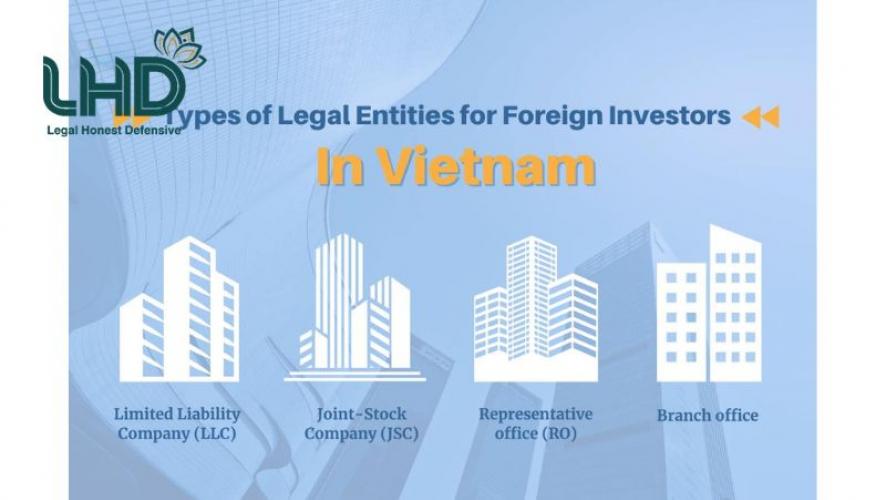
How a foreign investor structures their presence in Vietnam - a limited liability company, a branch, or a representative office - shapes how VAT obligations apply in practice. Representative offices generally can't conduct revenue-generating activities at all, so VAT questions rarely apply to them the way they do to an operating entity. Our guide to the different types of business entities in Vietnam walks through which structure fits which situation.
Building VAT compliance in from the start
The companies that handle VAT well tend to do one thing consistently: they design for it before incorporation, not after. That means choosing accounting software compatible with Vietnam's e-invoicing standards, setting up bank account structures that support the lower cash threshold, and briefing whoever handles bookkeeping on which rate applies to which revenue line.
Getting this wrong isn't usually catastrophic on its own. It's cumulative. Small misclassifications pile up quietly until an audit brings them all to the surface at once.
Talk to someone before your first invoice goes out
VAT Vietnam compliance touches pricing, cash flow, contracts and audit readiness all at once, and the rules shift often enough that a generic guide only takes you so far. LHD Law Firm has advised foreign investors on tax structuring and set up company in Vietnam matters across Ho Chi Minh City, Ha Noi and Da Nang since 2007, and can review your specific revenue model before you file your first return.
Send comment
Others Post








+68889+
+16889+
+39+
3+
0 comment