
What company registration really costs in Vietnam in 2026
- 03/08/2026

 CONTENT
CONTENT
Almost every foreign investor asks the same thing first: what is the real company registration cost in Vietnam? The official fee is tiny. The full bill usually is not. In our experience, the gap between the two is exactly what catches new founders off guard, so here is what you actually pay, to whom, and why.

The government fee is not the story
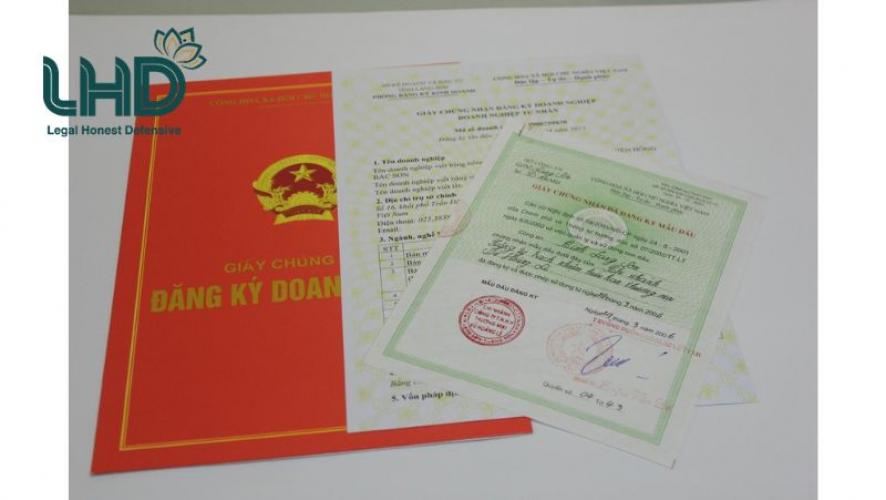
Two things get confused constantly. One is the government fee, a fixed charge collected by the business registration office. The other is the registration cost, which covers everything needed to walk away with a valid Enterprise Registration Certificate, or ERC. Translation. Notarization. Drafting. Sometimes a law firm's fee on top.
Under Circular 64/2025/TT-BTC, running from 1 July 2025 through 31 December 2026, the enterprise registration fee sits at half the standard rate. In practice, that means:
- Enterprise registration fee: 50,000 VND per filing. Waived if you file online through the National Business Registration Portal.
- Business registration publication fee: 100,000 VND, paid once after the ERC comes through.
That's it. That's the whole mandatory charge for a standard domestic company - rarely more than 150,000 VND, or about 6 USD. A common mistake we see is investors assuming this number represents the total cost of getting registered. It doesn't. It barely scratches the surface.
Where foreign investors actually spend money
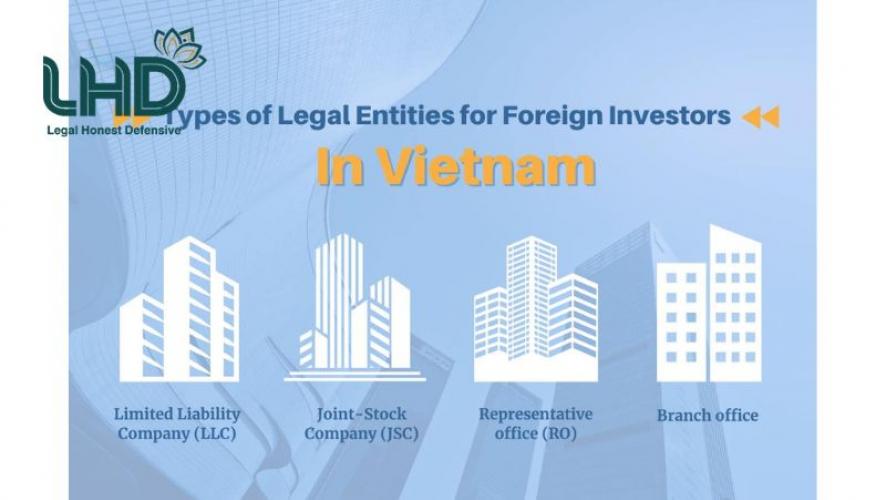
For a foreign-invested company, the ERC is step two. Step one is the Investment Registration Certificate, or IRC, and this is where the real spending starts. None of it is a government fee. It's preparation work, driven by how complicated your paperwork is:
- Legalizing foreign corporate documents at a Vietnamese embassy or consulate
- Certified translation of passports, charters, financial statements, bank references
- Notarizing copies used in the application file
- Drafting the investment project explanation and company charter to Vietnamese legal standards
Say an investor from Europe wants to open a small consulting company. Their documents need legalization, translation, and a charter that matches local requirements - three separate service lines before a single government office even sees the file. That work alone can run from a few hundred dollars to well over a thousand, depending on the home country and how many documents need translating.
What the numbers tend to look like
Market rates shift from provider to provider, but the 2026 range generally falls into these bands.

|
Company type |
Typical registration cost range |
|
Domestic LLC, Vietnamese owners |
roughly 3,500,000 – 10,000,000 VND (about 140 – 400 USD) |
|
Foreign-invested company, simple sector |
roughly 26,000,000 – 60,000,000 VND (about 1,000 – 2,400 USD) |
|
Foreign-invested company, regulated sector |
roughly 60,000,000 – 150,000,000 VND (about 2,400 – 6,000 USD) |
These are indicative bands, not price tags. They cover consultation through to the ERC, and for foreign investors, the IRC as well. What they don't cover is everything that comes after - office rental, staffing, ongoing accounting. That side of the budget lives in our separate guide on the cost of setting up a company in Vietnam.
One tax that quietly disappeared
From 1 January 2026, Vietnam scrapped the annual business license tax. Companies used to pay somewhere between 2,000,000 and 3,000,000 VND for it, household businesses up to around 1,000,000 VND, every single year starting from registration. Gone now. It's a small line item in the grand scheme, but it's also a signal - Vietnam is actively trimming red tape for founders, local and foreign alike.
Charter capital is often misunderstood
Many investors assume charter capital is a fee. It isn't. That money belongs to the company. It funds operations, sits in a capital account, and never goes to any government authority. Most business lines carry no fixed minimum, though officers reviewing IRC applications do check whether the declared figure is realistic for what the company plans to do. A handful of regulated sectors - banking, insurance, certain fintech services - are the exception, with statutory minimums that can climb into the tens of billions of VND.
DIY or hire a law firm?
Filing it yourself at the Department of Planning and Investment keeps the government fee as low as it gets. But self-filing has a cost nobody puts on paper: time. Miss one supporting document, use the wrong business line code, and the whole dossier bounces back. That can add weeks. We've watched investors lose an entire quarter to a single rejected filing over a translation error.
That's why most foreign investors - and a growing share of domestic founders - pay a fixed fee to a law firm instead. A solid package absorbs that rejection risk. It usually bundles in seal engraving, post-licensing tax registration, and the first round of compliance setup too. For the full walk-through of each stage, our step-by-step guide to set up company in Vietnam covers the process end to end.
And then the certificate arrives - now what?
The ERC isn't the finish line. Within days, a new company still needs:
- A company seal from an authorized engraver
- A digital signature for electronic tax filing
- A bank account, including a Direct Investment Capital Account for foreign-invested companies
- Initial tax registration and e-invoice setup
Small charges individually. Add them up, though, and they meaningfully change what founders originally budgeted for "registration."
Two questions we hear often
Does paying more speed things up?
Not officially - there's no legal express lane. What changes is the professional fee, since a rushed dossier needs closer review to avoid getting bounced.
Can the government fee disappear entirely?
For the enterprise registration fee, yes - file online and it's waived. The 100,000 VND publication fee, though, applies no matter how you file.
Ballparking your own number
Add three things: the government fee, the document preparation cost - higher if you're a foreign investor - and either your own time or a service provider's fixed fee. Simple domestic businesses usually land under 10,000,000 VND. Foreign-invested companies in ordinary sectors should plan for somewhere around 1,500 to 2,500 USD for the full registration phase. An exact quote will always beat a ballpark, though.
Want an exact number instead of a range?
Company registration cost in Vietnam depends on nationality, business line, and capital structure - three variables that move together, not separately. A general range only gets you so far. LHD Law Firm has guided foreign and domestic clients through company formation across Ho Chi Minh City, Ha Noi, and Da Nang since 2007, and can confirm a precise figure once we know your business details.
Contact LHD Law Firm
- Ho Chi Minh City: HP Tower, 60 Nguyen Van Thu Street, Tan Dinh Ward, HCM City – Tel: +84 28 2244 6739 – Email: all@lhdfirm.com
- Ha Noi: Anh Minh Tower, 36 Hoang Cau Street, O Cho Dua Ward, Ha Noi City – Tel: +84 24 6260 4011 – Email: hanoi@lhdfirm.com
- Da Nang: No. 71 Ly Tu Trong Street, Thach Thang Ward, Da Nang City – Tel: +84 905 987 929 – Email: danang@lhdfirm.com
Send comment
Others Post








+68889+
+16889+
+39+
3+
0 comment