
Which foreign investment sectors Vietnam actually allows foreigners into
- 03/08/2026

 CONTENT
CONTENT
A question we hear constantly: "Can I just open any business here?" Not quite. Vietnam welcomes foreign capital in most industries, but access is not uniform. Some sectors are fully open. Others cap foreign ownership. A few remain closed outright. Knowing where your business sits on that spectrum, before you sign a lease or hire staff, saves months of rework later.
This article maps out how market access actually works for foreign investment sectors in Vietnam, with real examples of where investors get tripped up. LHD Law Firm has advised on cross-border investment structuring here since 2007, and sector classification is often the very first question in any client call.

Three categories, not one rulebook
Vietnam's investment framework sorts business lines into three broad groups.
First, fully open sectors. Trading, IT services, consulting, manufacturing for export, and most light industry fall here. No ownership cap, no special approval beyond standard licensing.
Second, conditional sectors. Foreign investors can enter, but only after meeting specific requirements: minimum capital, local partnership, a cap on ownership percentage, or a specialized license from a ministry. Education, logistics, advertising, and certain retail activities sit in this bucket.
Third, restricted or closed sectors. National defense, some media activities, and a handful of others remain off-limits to foreign capital entirely, or nearly so.
Many investors assume their industry falls into the first group simply because it sounds generic. It rarely works that way in practice.
A retail case that illustrates the gap
One client planned a multi-brand retail store in Ho Chi Minh City. On paper, retail sounds straightforward. In reality, foreign-invested retail outlets beyond the first store require an Economic Needs Test in some provinces, an added layer most first-time investors never anticipate. The client's business plan assumed a single licensing step. It actually needed two, plus provincial coordination that added roughly six weeks to the timeline.
Compare that to a SaaS company we advised the same year. Software distribution carried none of those constraints. The IRC and ERC process ran in parallel, and the whole structure closed in under two months. Same investor profile, same budget size, wildly different path - because the sector, not the investor, set the rules.
Where foreign ownership caps still apply
A handful of industries cap the percentage of equity a foreign investor can hold, even when the sector is technically open. Advertising services, certain telecom infrastructure activities, and some transport-related businesses fall under this rule. In these cases, a joint venture with a Vietnamese partner is not optional - it is the only legal structure available.
This is where structuring advice matters more than paperwork speed. A joint venture agreement drafted without clear governance terms can leave a foreign investor technically compliant but practically sidelined in decision-making. We have seen this happen. It is avoidable with the right shareholder agreement from day one.
Conditional sectors worth checking early
A short, non-exhaustive list of business lines that carry conditions beyond standard licensing:
- Education and vocational training, subject to facility, staffing and capital conditions
- Logistics and freight forwarding, often requiring a joint venture structure
- Advertising, capped at certain ownership thresholds depending on the activity
- E-commerce and retail beyond a single outlet, subject to added review in some provinces
- Real estate business, tied to project-level equity and licensing rules
If your business plan touches any of these, budget extra time. Not because the process is impossible, but because it involves more than one government office signing off.
Reading the negative list before you commit

Vietnam's WTO commitments and current investment law set out what is called a negative list: sectors with market access conditions, ownership limits, or geographic restrictions. It is dense reading, admittedly. But checking it against your exact business activity, not just your industry label, is one of the cheapest due diligence steps available. A slight difference in wording, retail versus wholesale, for instance, can shift which rules apply.
In our experience, investors who skip this step do not usually fail outright. They just spend far longer getting licensed than they expected, often because the application gets redirected mid-process once an officer flags a conditional activity buried inside a broader business plan.
Practical steps before filing
- Match your exact planned activity, not a general industry label, against the negative list
- Confirm whether your sector requires a joint venture, and if so, negotiate governance terms upfront
- Budget realistic time for conditional licenses; some routinely add 4 to 8 weeks
- Where a specific capital threshold applies, plan the figure before drafting your business plan, not after
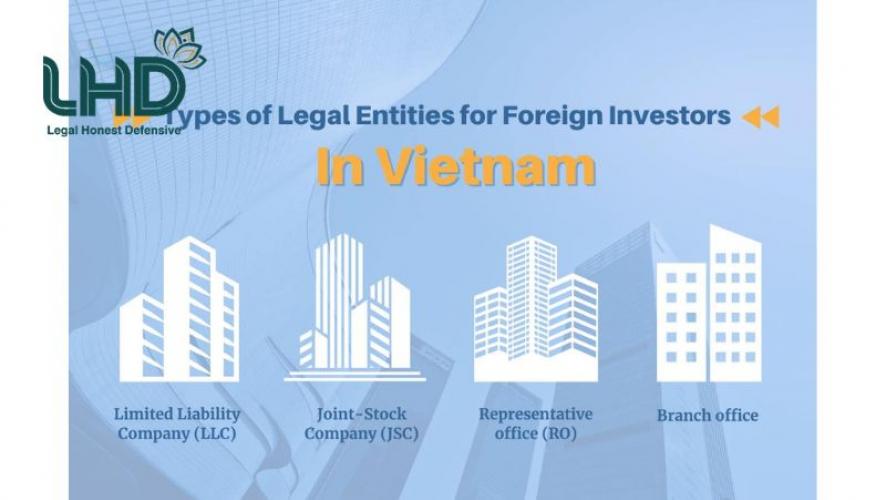
For a full walkthrough of the registration sequence once your sector is confirmed, see our guide to set up company in Vietnam. We also cover entity choice in more detail in our article on types of business entities in Vietnam for foreign investors, which pairs well with sector planning since the two decisions are usually made together.
Frequently asked questions
Are all foreign investment sectors Vietnam permits open to full foreign ownership? No. Many are open to 100 percent foreign ownership, but a meaningful number carry caps, joint venture requirements, or added licensing steps.
How do I find out if my business line is conditional? Check the current negative list against your exact planned activity, not just your general industry. When wording is unclear, a legal review before filing avoids costly redirection later.
Does a conditional sector always mean a longer timeline? Usually, yes. Expect additional review steps, sometimes at the provincial level, that a fully open sector does not require.
Talk to LHD Law Firm before you file
Sector classification shapes everything downstream: entity type, ownership structure, timeline, and even where you can operate. Getting this assessment right before filing is far cheaper than correcting it after a rejection. LHD Law Firm has supported foreign investors across Ho Chi Minh City, Ha Noi, and Da Nang since 2007.
Send comment
Others Post








+68889+
+16889+
+39+
3+
0 comment