
How much is the minimum capital Vietnam requires from foreign investors?
- 03/08/2026

 CONTENT
CONTENT
"How much money do I actually need?" It is almost always the first question a foreign founder asks us, usually before the company name is even settled. The honest answer disappoints some people. There is no single number. And that, more than anything else, is why so many licensing files get stuck.
Vietnam does not publish one universal minimum capital figure. The amount depends on your industry, the size of the project, and whether your business line sits in a conditional sector with its own legal capital floor. Many investors assume the rule works like Singapore or Hong Kong, where a token amount is enough on paper. It does not. LHD Law Firm has guided foreign investors through company registration in Vietnam since 2007, and capital structuring is one of the questions we field most often.

Charter capital and legal capital are not the same thing
Two terms get confused constantly.
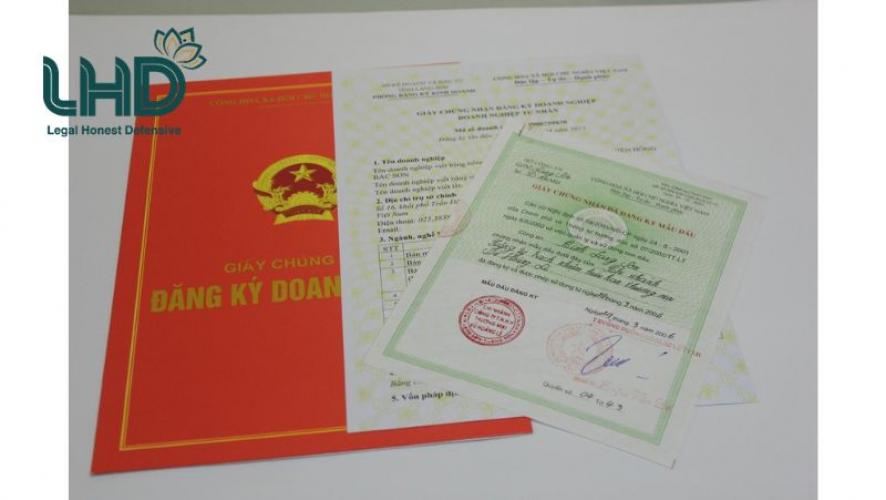
Charter capital is what the investor pledges and registers at incorporation. It must be paid in full within 90 days of the Enterprise Registration Certificate being issued. No fixed floor applies here for most industries. You set the figure based on your own plan.
Legal capital is different. It is a statutory minimum that applies only in regulated sectors - banking, real estate, certain fintech licenses. Fall under one of these, and there is no room to negotiate the threshold.
Trading, consulting, IT, light manufacturing: none of these carry a legal capital rule. The real question is whether your declared charter capital looks credible for what you say you plan to do.
What an officer is actually thinking when they review your file
There is no checklist with a dollar figure on it. Instead, the Department of Planning and Investment weighs a few things at once:
- Whether the scale of the declared capital matches the scale of the proposed activities
- Whether it covers early costs - office rental, salaries, basic equipment
- The gap, if any, between the investment plan submitted and the capital actually pledged
- Any sector-specific floor tied to your license
A consulting firm renting a small office and hiring two staff might clear review with around 10,000 US dollars declared. A manufacturer importing machinery and leasing an industrial plot will need a very different number, often 150,000 US dollars or more, simply to look financially real on paper. Under-declare, and expect a request for clarification, or a rejection. Over-declare by a wide margin, and nothing illegal happens - but the money sits idle, and repatriating profit later gets more complicated than it needs to be.
A common mistake we see: treating capital as a formality
One client, a European retail brand entering Vietnam a few years ago, registered a modest charter capital assuming the reviewing office would not scrutinize a small trading operation. It did. The file came back twice with requests to justify the figure against the store fit-out and inventory plan. Three months lost, all avoidable.
Contrast that with a software company we advised recently. Their business model needed almost no physical infrastructure, so a lean capital figure made sense and sailed through. Same country, same law, completely different right answer - because the "right" number was never really about the law. It was about matching capital to the actual business.
Where the law does set a hard number
A handful of conditional sectors carry an explicit statutory minimum:
- Real estate business, tied to minimum equity ratios based on project size
- Banking and credit institutions, where charter capital runs into the trillions of Vietnamese dong
- Certain payment intermediary and fintech activities, with a legal capital floor set by the State Bank of Vietnam
- Education and vocational training, which pairs a minimum capital rule with facility and staffing conditions
Outside these categories, the negative list under current investment regulations spells out market access conditions, ownership caps, and occasionally capital thresholds by business line. Check where your activity sits on that list before you sign a lease. It is one of the cheapest steps in the entire process, and one of the most skipped.
Why under - capitalizing rarely saves time

It is tempting to register a low figure just to move faster through licensing. In our experience, it almost never works out that way. A mismatch between declared capital and stated operations invites a revised business plan, a longer review, or an outright rejection.
The trouble does not end at licensing, either. Banks sometimes hesitate to open a direct investment capital account for a company that looks thin on paper. Landlords and partners notice too - a low charter capital can read as a lack of commitment, fairly or not. None of this argues for over-investing. It argues for a figure that genuinely reflects what the business needs to survive its first year or two. For a wider view of the fees and running costs that sit alongside your capital plan, our guide on the cost of setting up a company in Vietnam is worth reading before you file.
Before you submit, do this
- Build a realistic budget for the first 12 to 24 months before settling on a capital figure
- Confirm early whether your sector is conditional and carries a fixed legal capital rule
- Keep documents ready that back up your number: lease agreements, equipment quotes, staffing plans
- Open the direct investment capital account as soon as the Enterprise Registration Certificate is issued, since every contribution must move through it
Frequently asked questions
Is there a general minimum capital Vietnam law applies to all companies?
No. Most sectors have no fixed floor. It depends on what the licensing authority considers sufficient for your specific project.
Can charter capital be increased later, once the business grows?
Yes, through a standard amendment procedure. It involves paperwork, and sometimes additional approval, but it is routine.
What if the full charter capital is not paid within 90 days?
Expect administrative penalties, and the unpaid portion will need to be adjusted or reduced in the company records.
Get tailored advice from LHD Law Firm
Getting the capital figure right affects licensing speed, banking relationships, and how much flexibility you keep down the road. It matters more than most first-time investors expect. LHD Law Firm has advised on company formation and investment structuring in Vietnam since 2007, with offices in Ho Chi Minh City, Ha Noi, and Da Nang.
For a review of your specific business plan and capital structure, contact us:
LHD Law Firm Ho Chi Minh City HP Tower, 60 (Floor 7), Nguyen Van Thu Street, Tan Dinh Ward, Ho Chi Minh City, Vietnam Tel: +84 28 2244 6739 | Email: all@lhdfirm.com
LHD Law Firm Ha Noi Anh Minh Tower, 36 (Floor 4), Hoang Cau Street, O Cho Dua Ward, Ha Noi City, Vietnam Tel: +84 24 6260 4011 | Email: hanoi@lhdfirm.com
LHD Law Firm Da Nang No. 71, Ly Tu Trong Street, Thach Thang Ward, Da Nang City, Vietnam Tel: +84 905 987 929 | Email: danang@lhdfirm.com
Send comment
Others Post








+68889+
+16889+
+39+
3+
0 comment